AWS Summit London 2026
Securing the blind spot in your pipeline
· London, UK
Do you know what’s actually in your application? Modern apps rely on hundreds of third-party libraries, creating a massive, often silent security blind spot. Research confirms that package registries are rife with vulnerabilities—risks that remain hidden until they’re exploited. In this session, learn how AWS CodeArtifact and Datadog Code Security provide a unified defense. We’ll demonstrate how to use preventive controls to vet what enters your builds and detective controls to monitor production in real-time. Stop guessing and start owning your software supply chain with two essential layers of protection.
AWS + Datadog Securing the blind spot in your pipeline Daniel « phrawzty » Maher Senior Security Advocate & Researcher
ç Do you really know what’s in your stack? 2
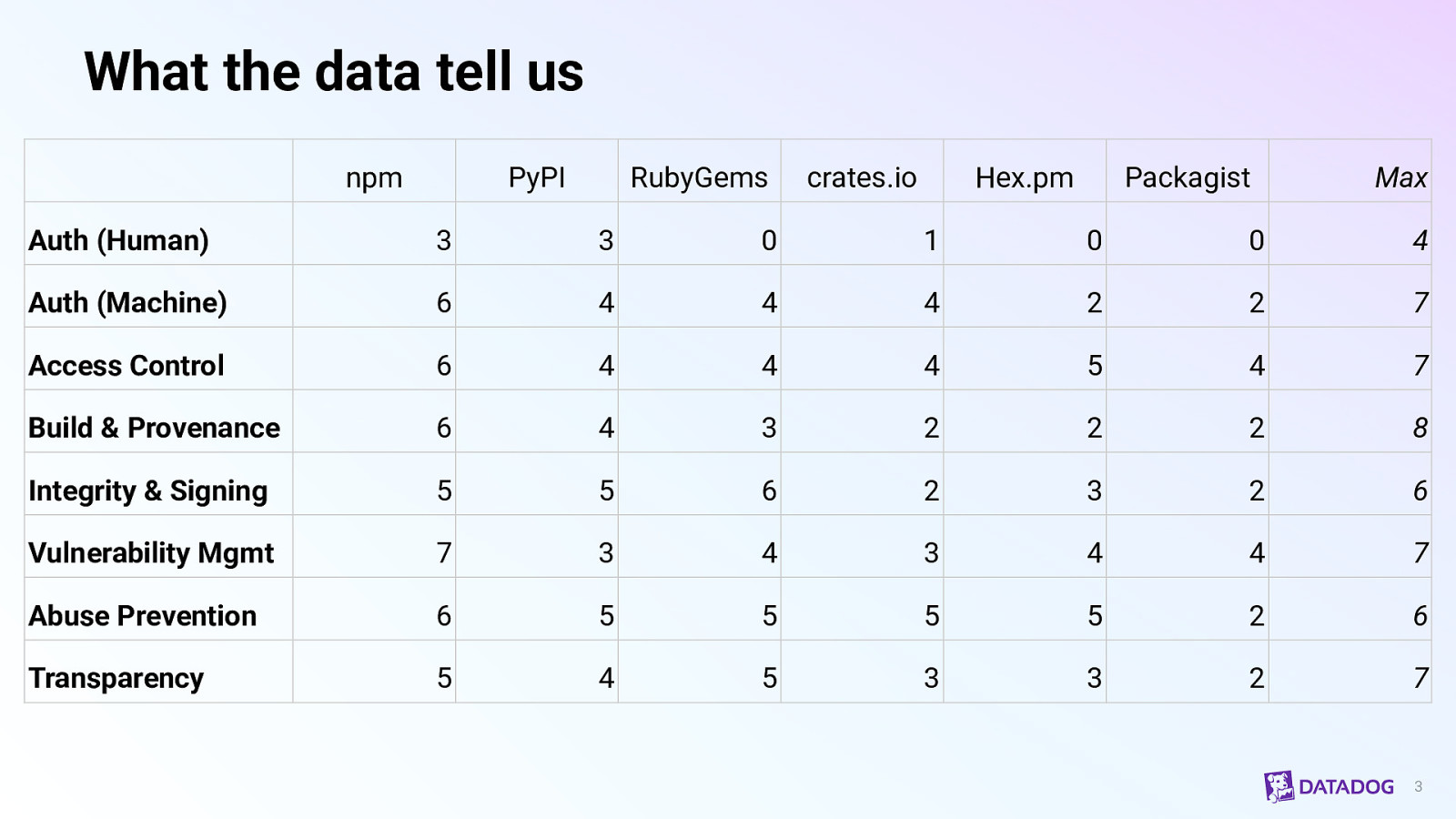
What the data tell us npm PyPI RubyGems crates.io Hex.pm Packagist Max Auth (Human) 3 3 0 1 0 0 4 Auth (Machine) 6 4 4 4 2 2 7 Access Control 6 4 4 4 5 4 7 Build & Provenance 6 4 3 2 2 2 8 Integrity & Signing 5 5 6 2 3 2 6 Vulnerability Mgmt 7 3 4 3 4 4 7 Abuse Prevention 6 5 5 5 5 2 6 Transparency 5 4 5 3 3 2 7 3
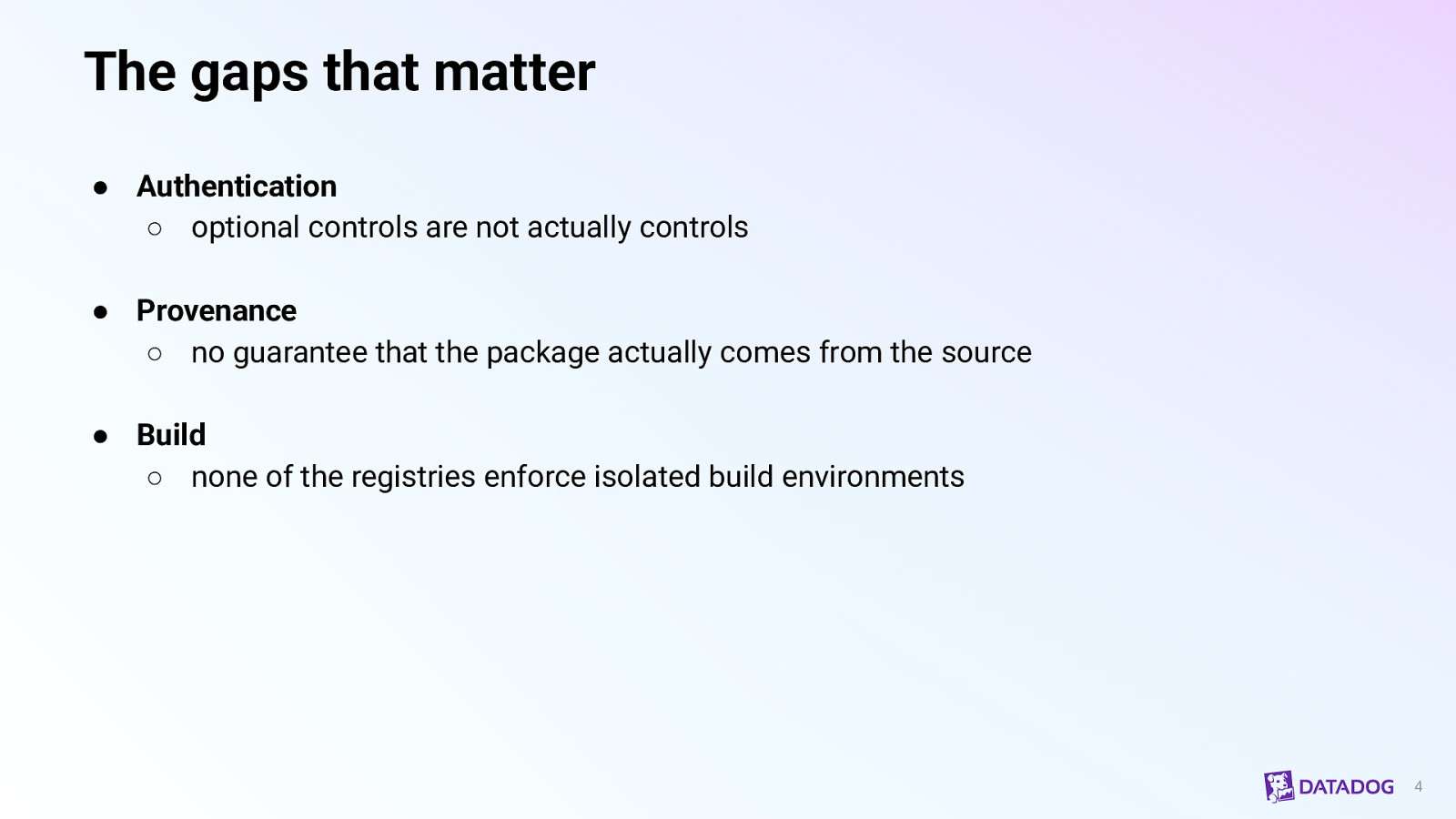
The gaps that matter ● Authentication ○ optional controls are not actually controls ● Provenance ○ no guarantee that the package actually comes from the source ● Build ○ none of the registries enforce isolated build environments 4
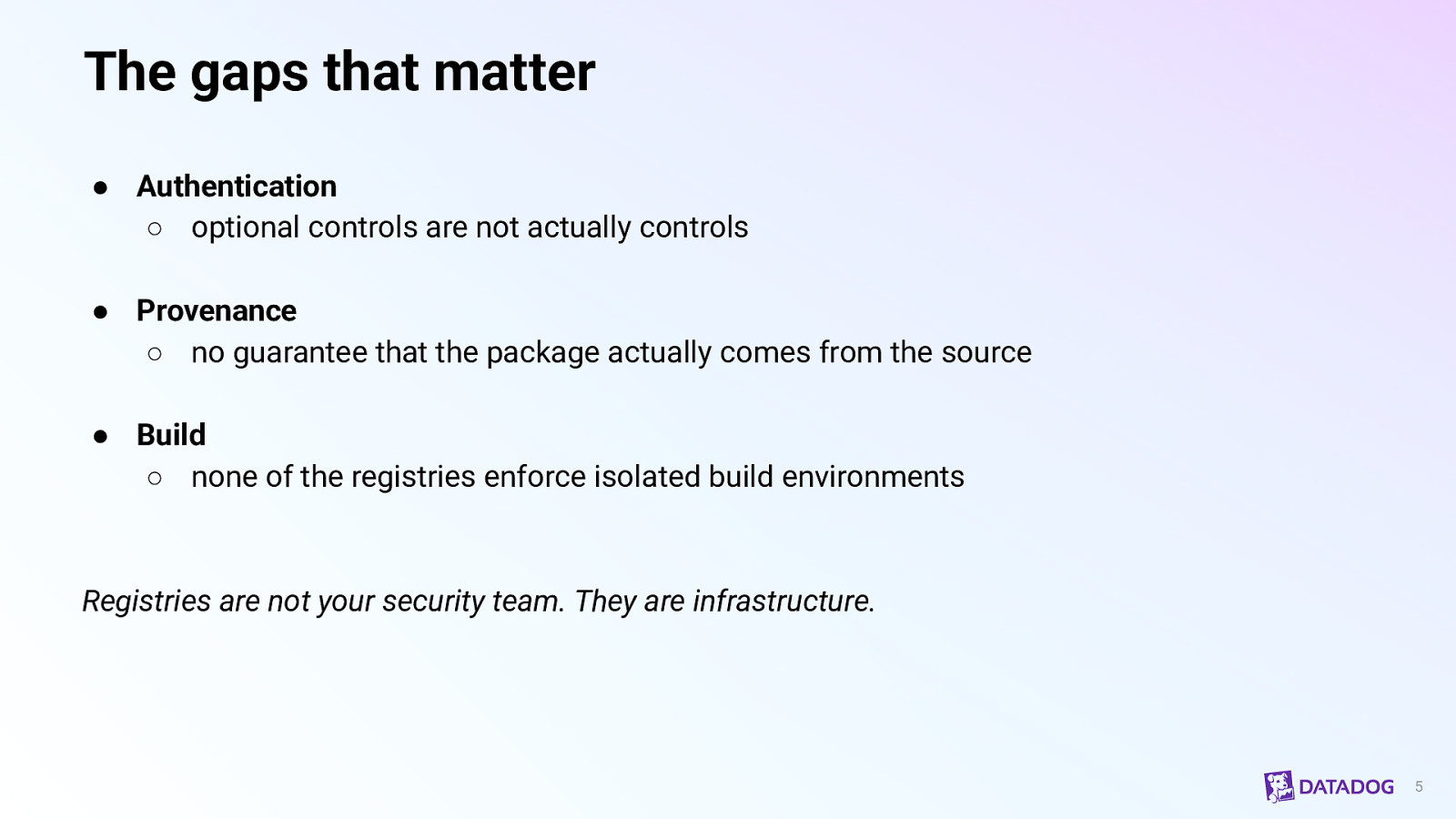
The gaps that matter ● Authentication ○ optional controls are not actually controls ● Provenance ○ no guarantee that the package actually comes from the source ● Build ○ none of the registries enforce isolated build environments Registries are not your security team. They are infrastructure. 5
AI amplifies the problem ● AI Assistants add dependencies automatically ● The last point of human friction has now disappeared ● What was already largely invisible is now even faster 6
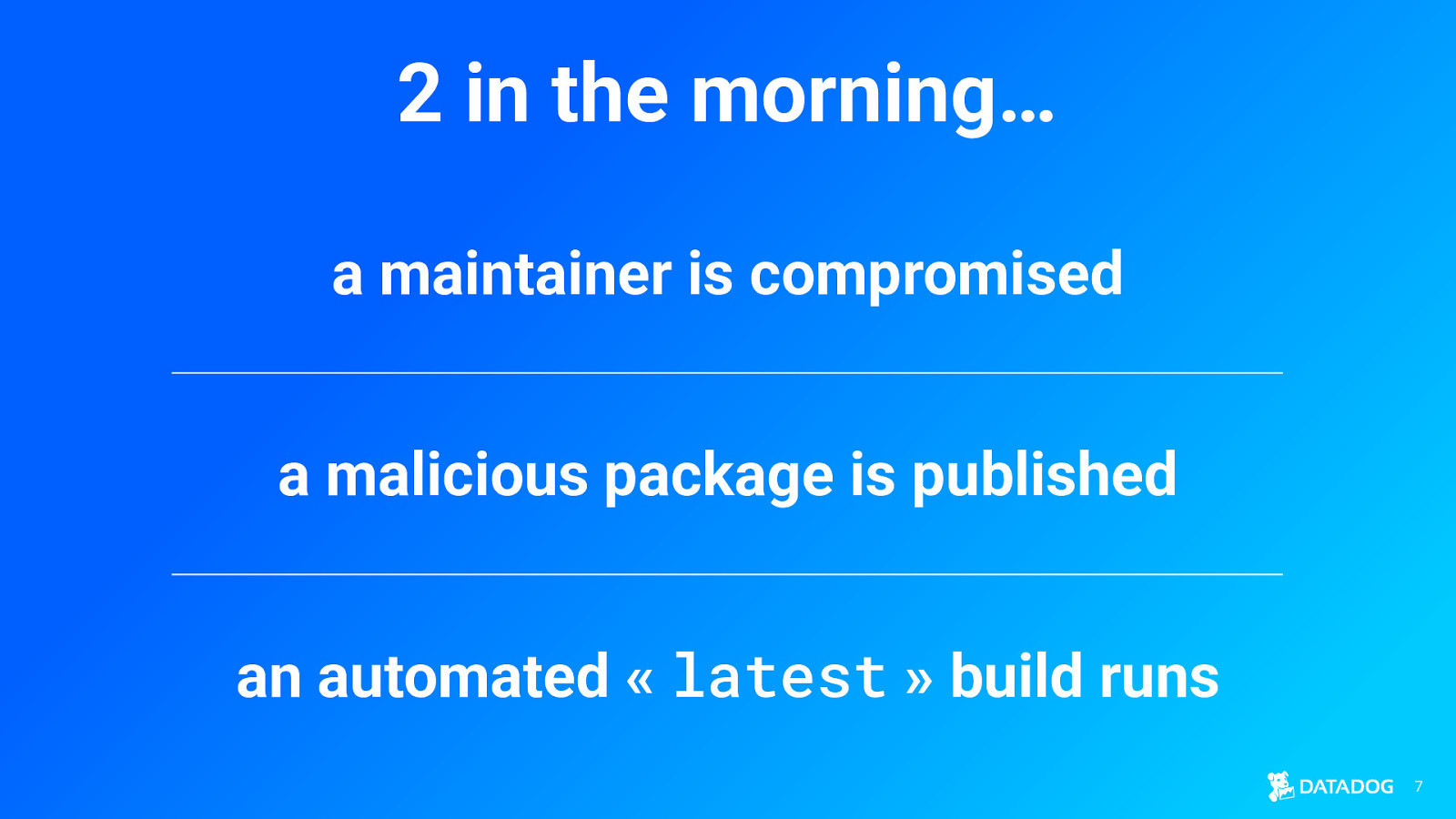
2 in the morning… a maintainer is compromised a malicious package is published an automated « latest » build runs 7
AWS CodeArtifact: the preventive control ● Managed artefact repository service ● Compatible with npm, pip, Maven, NuGet, etc… ● Your tools, your workflow ● You decide what gets in 8
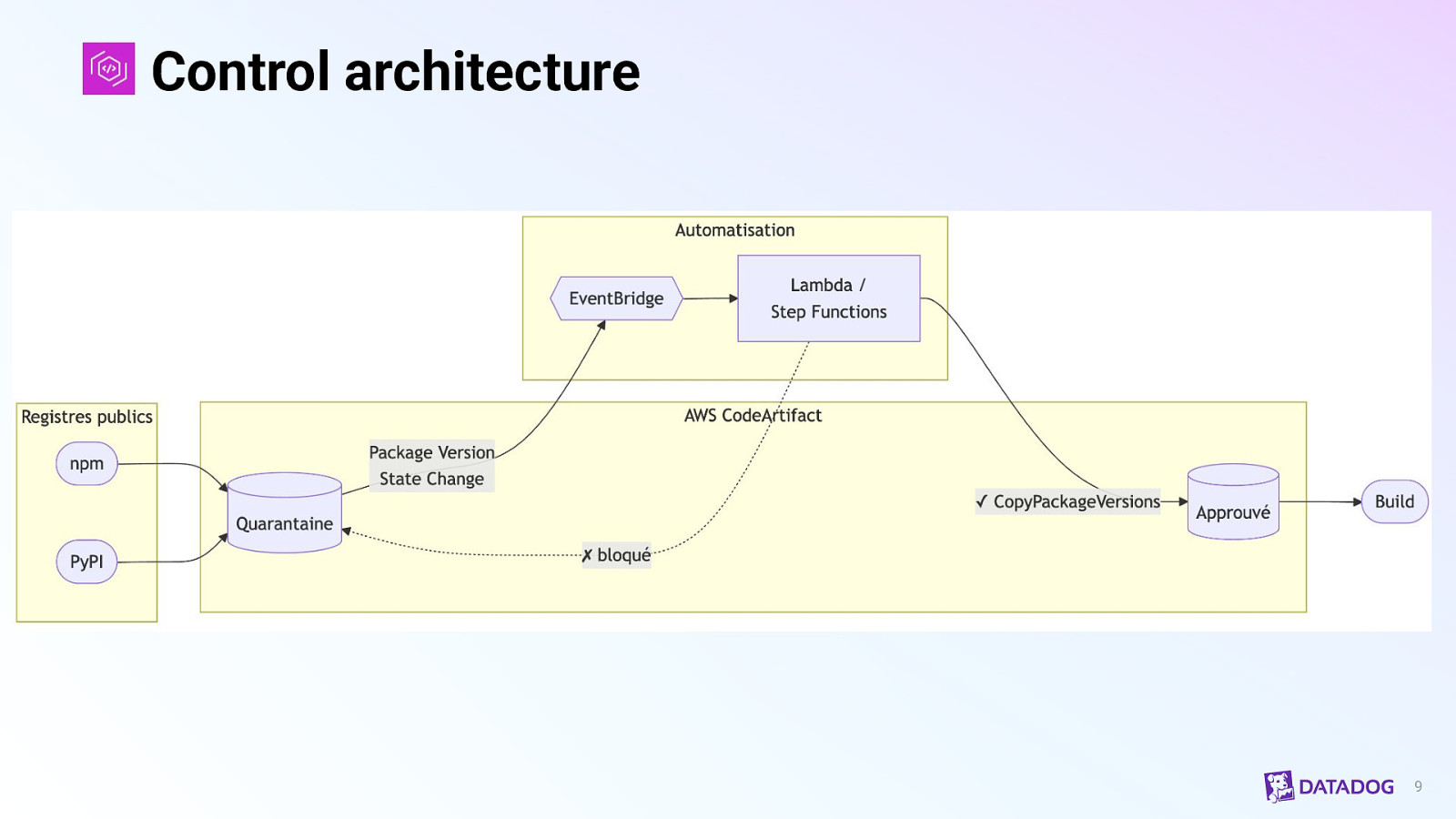
Control architecture 9
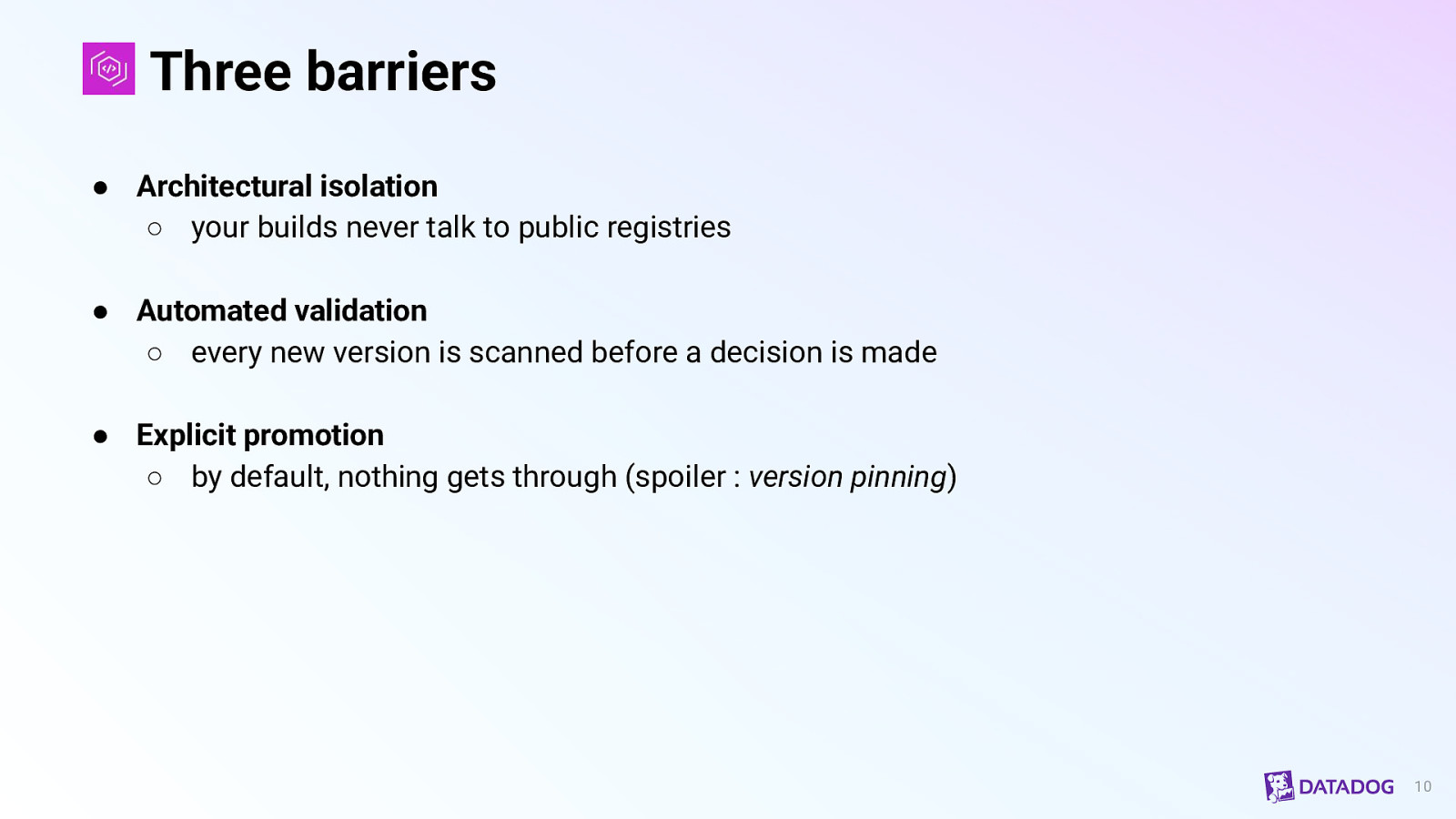
Three barriers ● Architectural isolation ○ your builds never talk to public registries ● Automated validation ○ every new version is scanned before a decision is made ● Explicit promotion ○ by default, nothing gets through (spoiler : version pinning) 10
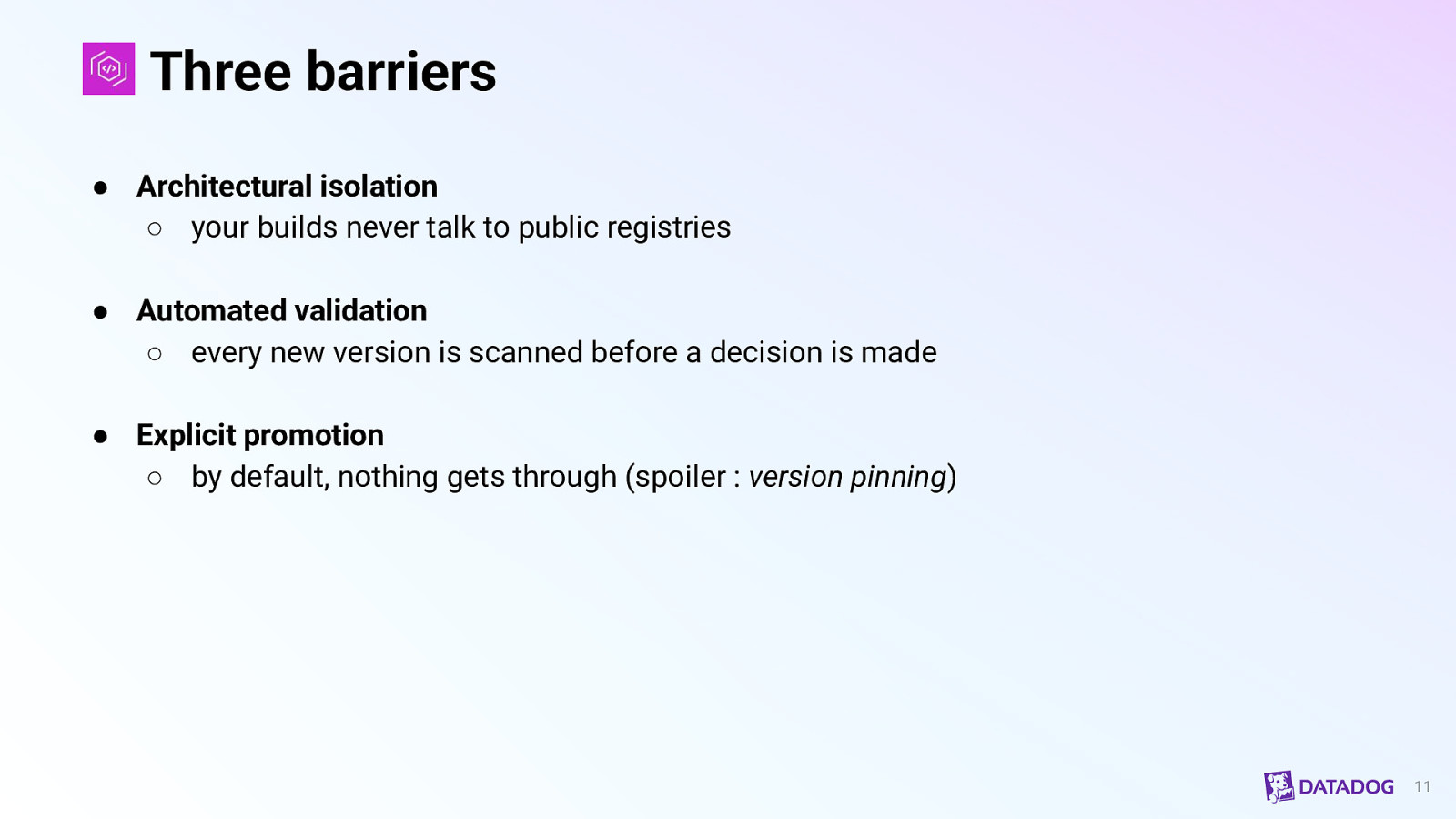
Three barriers ● Architectural isolation ○ your builds never talk to public registries ● Automated validation ○ every new version is scanned before a decision is made ● Explicit promotion ○ by default, nothing gets through (spoiler : version pinning) 11
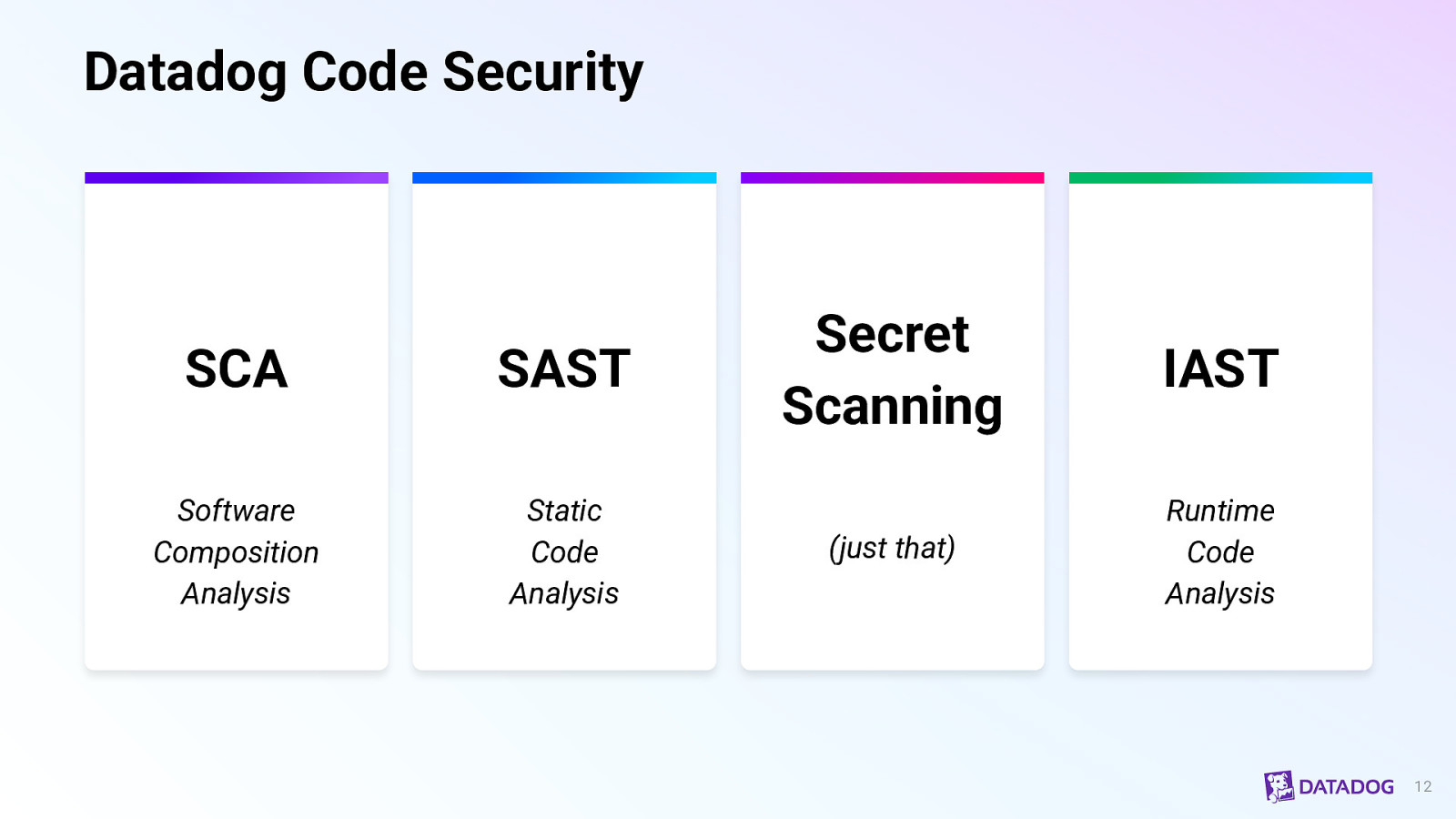
Datadog Code Security SCA SAST Software Composition Analysis Static Code Analysis Secret Scanning IAST (just that) Runtime Code Analysis 12
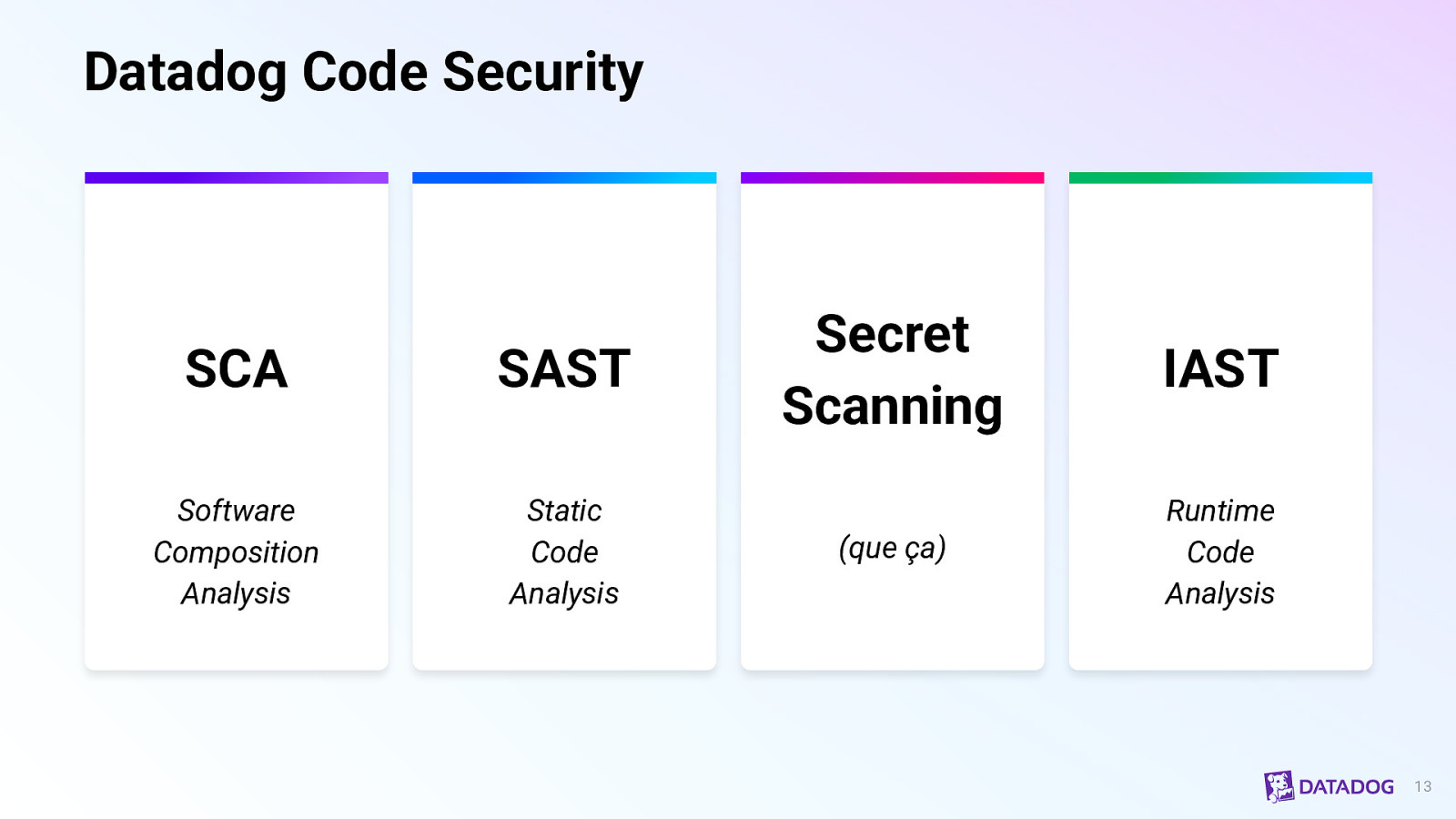
Datadog Code Security SCA SAST Software Composition Analysis Static Code Analysis Secret Scanning IAST (que ça) Runtime Code Analysis 13
6 months later… malicious package published (oops) vulnerability in prod (OOPS) time to panic ?! 14
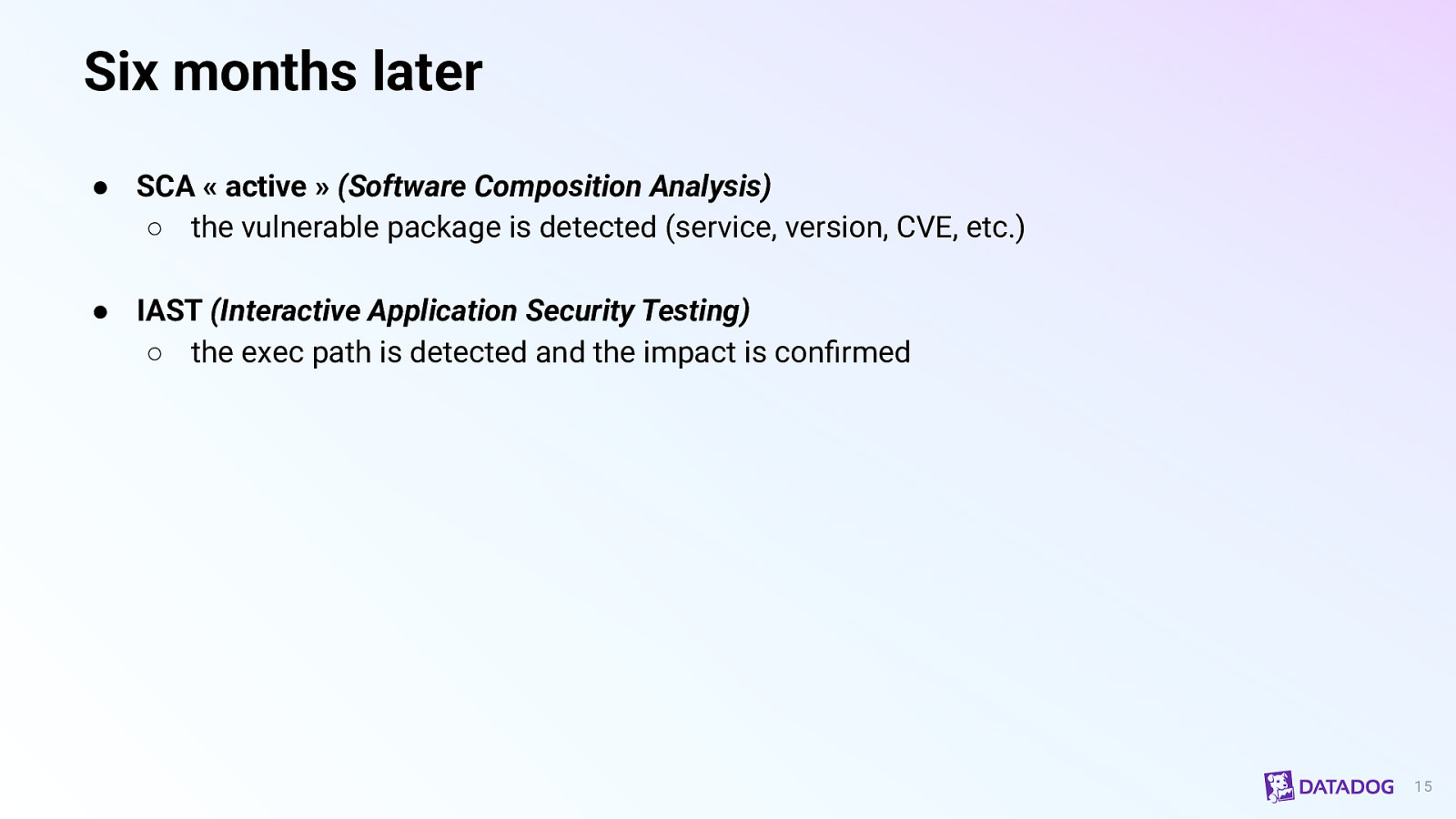
Six months later ● SCA « active » (Software Composition Analysis) ○ the vulnerable package is detected (service, version, CVE, etc.) ● IAST (Interactive Application Security Testing) ○ the exec path is detected and the impact is confirmed 15
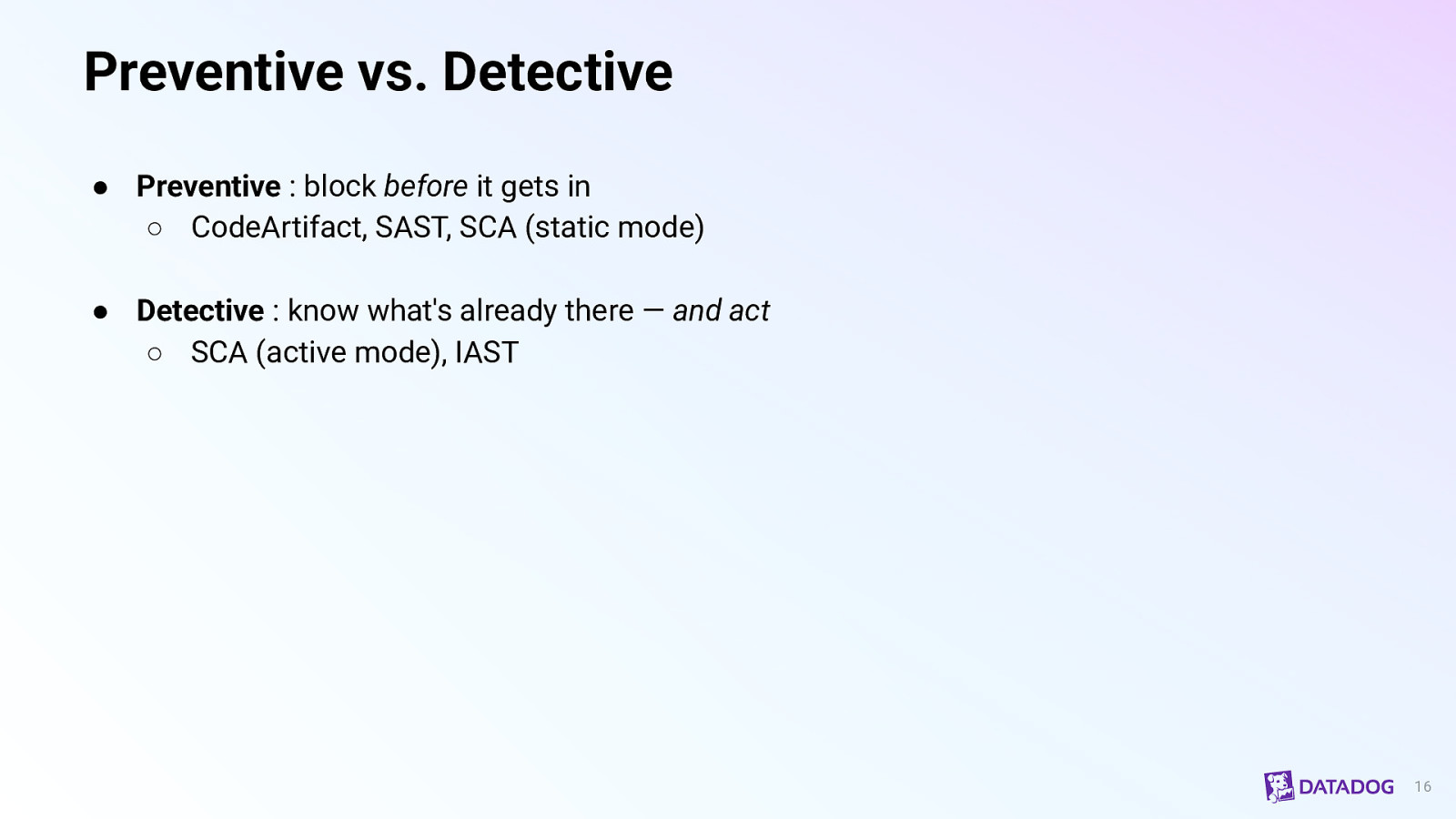
Preventive vs. Detective ● Preventive : block before it gets in ○ CodeArtifact, SAST, SCA (static mode) ● Detective : know what’s already there — and act ○ SCA (active mode), IAST 16
ç AWS et Datadog together = defence in depth 17
Where to start? ● Map your dependency graph — know what you’re building on ● Identify your source registries ● Establish a preventive control layer ● Ensure full production visibility 18
Where to start? ● Map your dependency graph — know what you’re building on ● Identify your source registries ● Establish a preventive control layer ● Ensure full production visibility These are not four projects over six months. These are four steps you can start this very week! 19
Merci ! AWS CodeArtifact https://aws.amazon.com/codeartifact Datadog Code Security https://docs.datadoghq.com/security/code_security Our super interesting blog 😁 https://securitylabs.datadoghq.com 20